2026: Brave Leadership in Uncertain Times for Nature and Climate
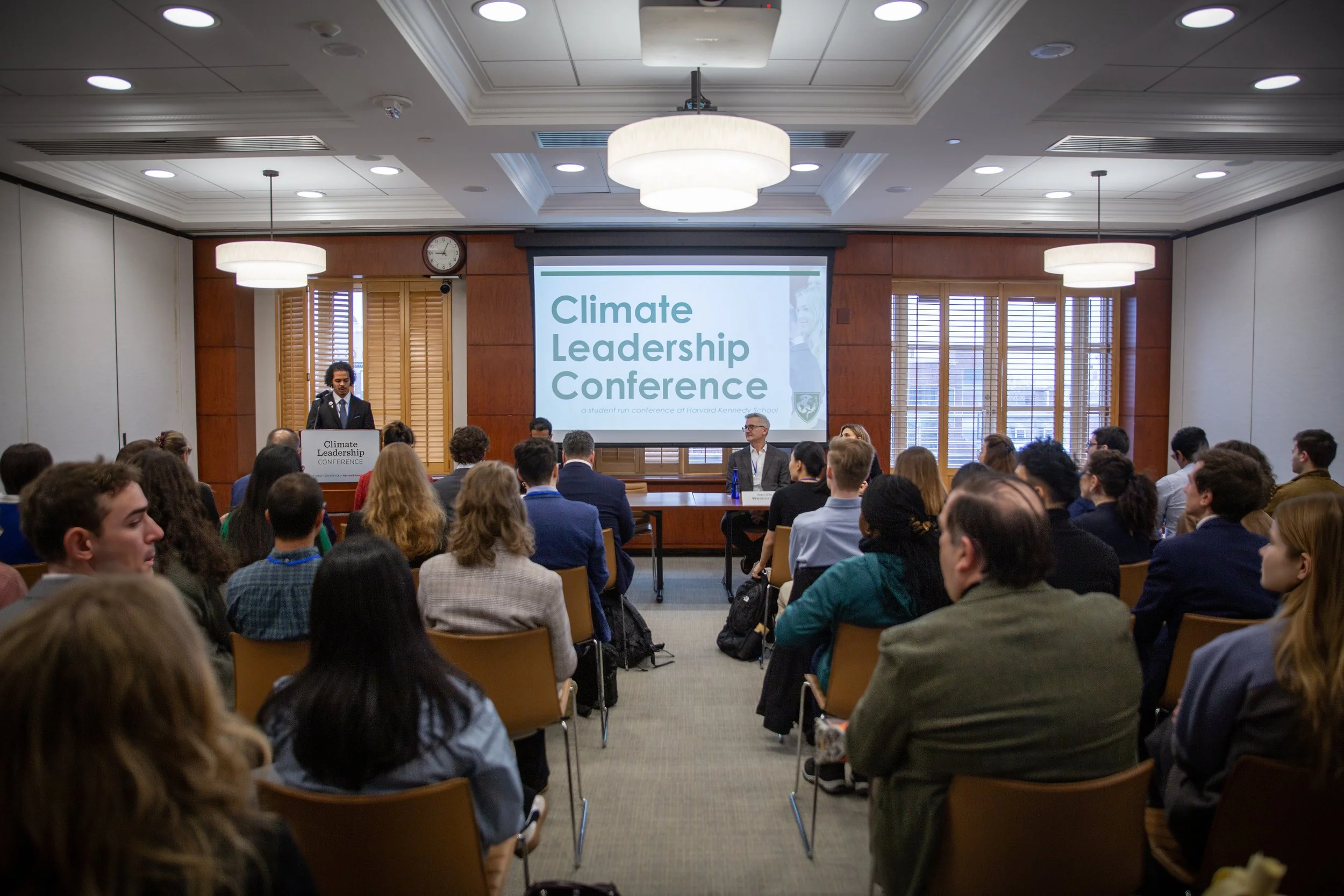
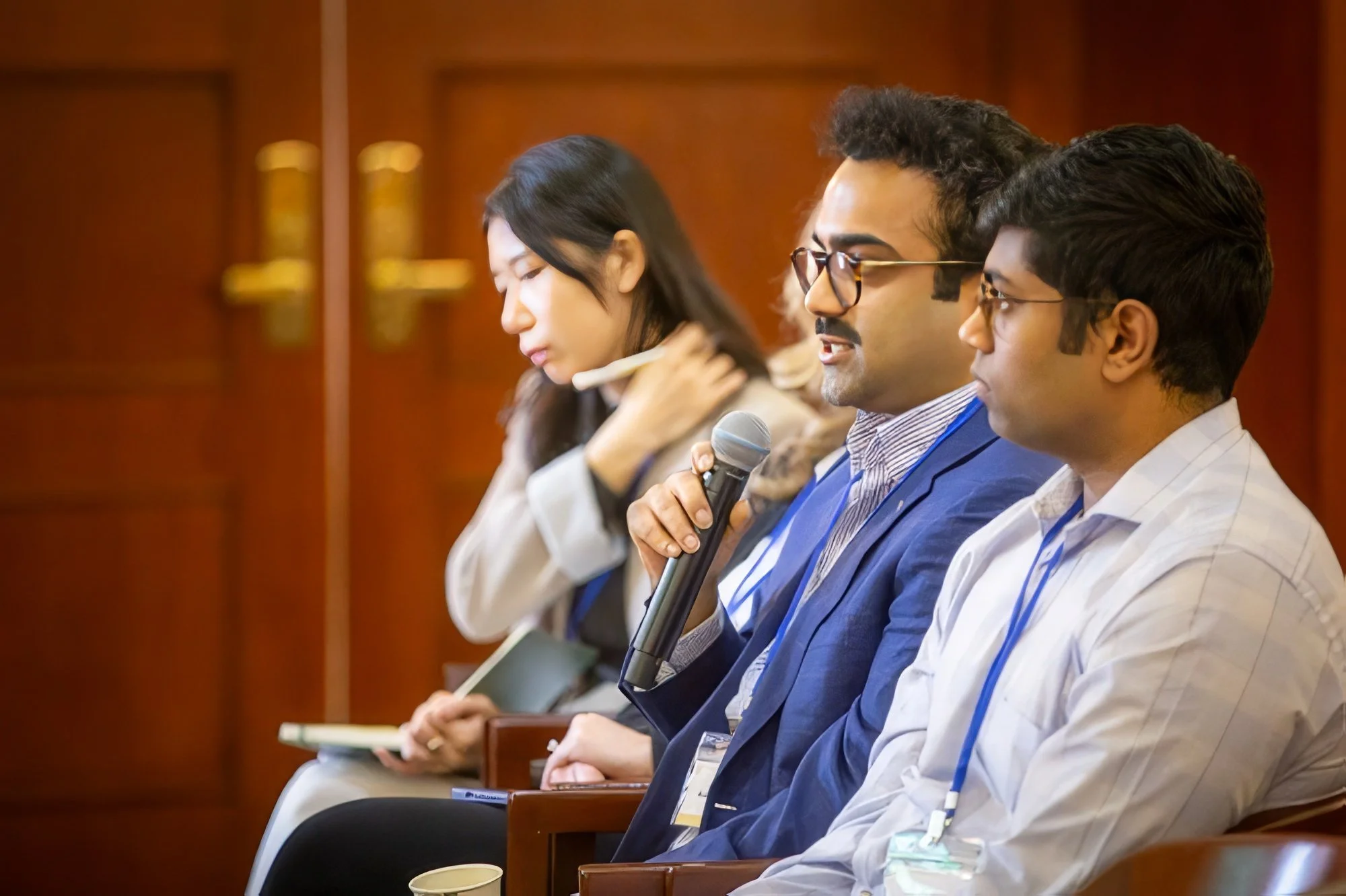
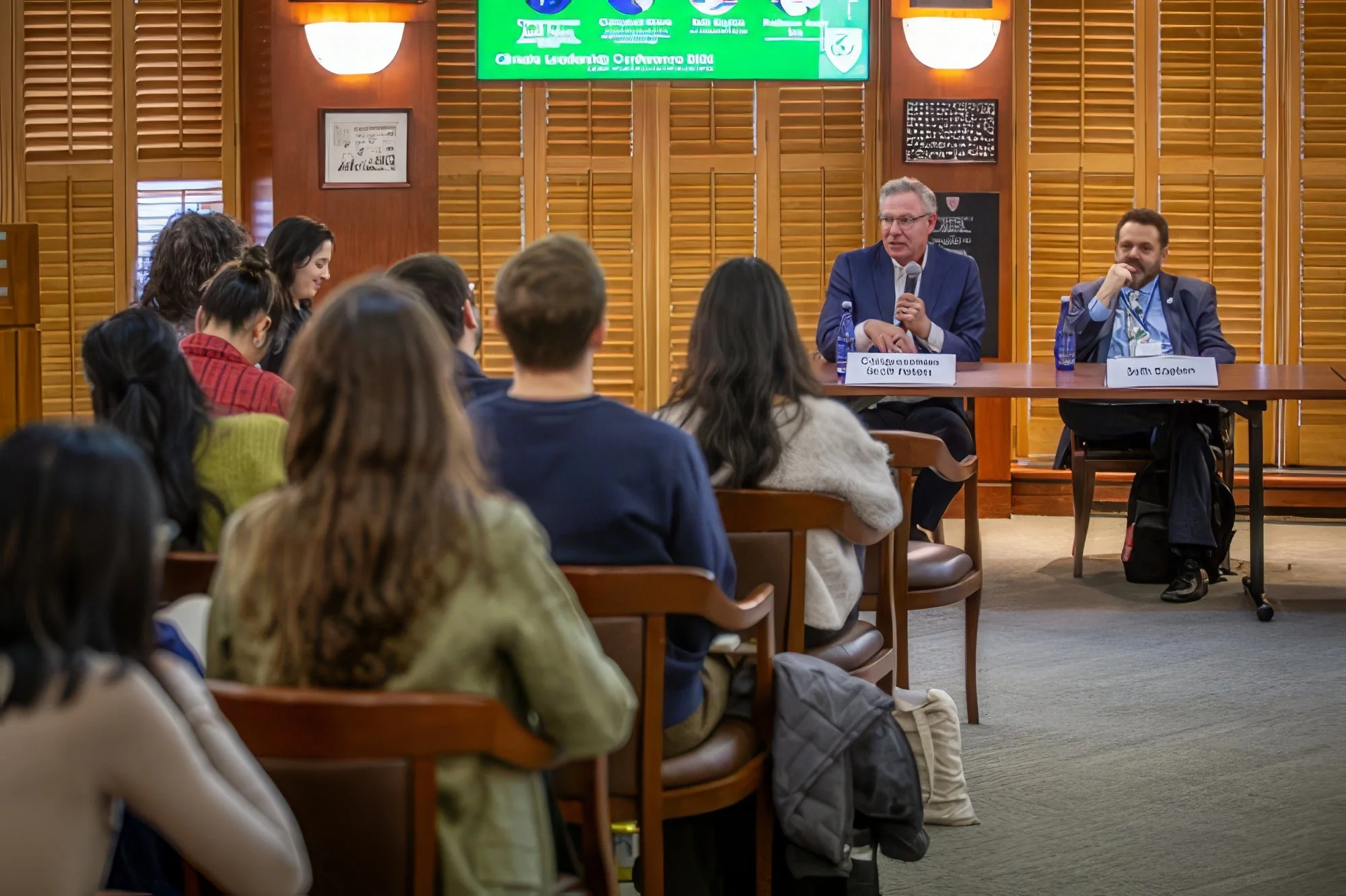
The CLC26, “Brave Leadership in Uncertain Times for Nature and Climate,” brought together students, academics, policymakers, industry leaders, and practitioners to explore the challenges and opportunities shaping the future of climate policy and leadership. The third annual student-run conference attracted more than 250 registrants across Harvard and other universities, including MIT, Tufts, Columbia, and Cornell. 34 speakers contributed to a keynote and 13 panels across three tracks—Energy, Environment, and Governance—while six speakers hosted small-group career chats. By bringing together perspectives from diverse disciplines and sectors, the conference fostered dialogue and professional connections, giving participants opportunities to engage with the complex policy questions defining today’s climate landscape.
Through discussions on energy systems, environmental protection, and governance, speakers examined how leaders can respond to political uncertainty, technological change, and competing economic and environmental priorities while driving meaningful climate action. The conference also highlighted the value of cross-sector collaboration, innovative policy approaches, and the preparation of the next generation of climate leaders.
Key themes from CLC26:
Commitment and resilience are climate strategies: Defending hard-won protections matters as much as advancing implementation; credibility is earned through consistency.
Honest engagement on tradeoffs strengthens policy design: Speakers named tensions openly: speed vs. community consent, critical-mineral supply chains and geopolitics, and land use vs. conservation.
Narrative and relationships drive durable change: Technical solutions are not enough without trust across divides, effective storytelling and long-term relationships.
Learnings to take forward:
Offshore wind is in a reset moment. The next chapter requires new delivery models, smarter risk-sharing and tighter coordination between states, markets and supply chains.
Science must translate into decisions. The discussion on Arctic permafrost emphasized moving from knowledge generation to action.
Community engagement should be a partnership, not a checkbox. Moving fast on clean energy depends on bringing communities along.
Supply chains are a vulnerability. The transition depends on critical minerals, permitting and geopolitics, and single-point dependencies create risk.
Conservation at scale needs partnerships. Conservation finance works best alongside Indigenous leadership and land stewardship.
Facts are necessary but not sufficient. People act when they feel agency, trust the messenger and see themselves in the story.
Speakers and Panelists:
Keynote: Jakob Werksman, Principal Adviser to the Director-General for Climate Action, European Commission
Student Moderator: Margherita Bruti Liberati, MPP 2026
Energy Track:
Offshore Wind Deep Dive: Is the Model Broken?
Marian Harkavy, Director of Policy and Planning of the Department of Energy Resources at the Commonwealth of Massachusetts
Hassan Hamdan, Managing Director and Partner with Alvarez and Marsal Infrastructure and Capital Projects
Tim Reppucci, Senior Regulatory Counsel in the Legal Department of ISO New England Inc.
Katie Segal, Senior Director of Offshore Wind for the Environmental League of Massachusetts
Student Moderator: Iman Aziz, MPA 2027
Bottleneck to Breakthrough: Permitting and the Race for Critical Minerals
Gray Bender, Consulting Manager for Energy Transition at S&P Global
Meredith Shwartz, Associate Fellow, Critical Minerals Security Program at the Center for Strategic and International Studies
Student Moderator: Phoebe Fu, MPP 2027
Keeping the Lights On: Innovation and Investment in Grid Modernization
U.S. Congressman Scott Peters, House Energy and Commerce Committee Member
Campbell Howe, Program Manager for Advanced Energy Commercial Partnerships and Investments at Google
Seth Kaplan, Vice President at Grid Strategies
Professor Andy Sun, MIT Sloan School of Management
Student Moderator: Charlotte Laracy, MPP 2027
How to Build Renewable Energy: Balancing Climate Urgency and Community Consent
Romany Webb, Associate Professor of Climate and Deputy Director of the Sabin Center for Climate Change Law at Columbia Law School
Staci Rubin, Commissioner of Massachusetts Department of Public Utilities
Nate Mayo, Principal at Intertidal LLC
Bob King, President of A&D Hydro, Inc
Student Moderator: Gabriel Bonnamy, MIT
Environment Track:
Environmental Peacebuilding: Legal Frameworks and Considerations
Carl Bruch, Director of International Programs at Environmental law Institute
Student Moderator: Marissa Ng, MPA 2026
Storytelling for Climate Action: Navigating Misinformation and Polarization
Dr. Sweta Chakraborty, CEO of We Don’t Have Time- North America
Dharna Noor, Canadian Journalist
Monica Medina, Professor at Columbia University and former Assistant Secretary of State for Oceans at the US State Department
Student Moderator: Robbie MacPherson, Kennedy Scholar 2026
Large-Scale Conservation at a Crossroads: Scaling through Finance, Governance, and Indigenous Leadership
David Meyers, Executive Director of Conservation Finance Alliance
Kristen Walker Painemilla, Senior Vice President at Conservation International
Rand Wentworth, Lecturer in Public Policy at Harvard Kennedy School
Student Moderator: Adin Becker, MPA 2026
Farming for the Future: Regenerative Agriculture and Circular Economies
Dr. Wolfram Schlenker, Professor at Harvard Kennedy School
Professor Rattan Lal, The Ohio State University and Center for Carbon Management and Sequestration
Dr. Alicia Harley, Senior Research Fellow at Harvard Kennedy School
Student Moderator: Palakshi Nerkar, MPP 2026
Governance Track:
What’s Next for the Clean Energy Transition and the U.S.’s Industrial Policy?
Kelly Cummins, Former Principal Deputy Director for Clean Energy Demonstrations, U.S. Department of Energy
Lindsey Baxter-Griffith, Executive Director of Clean Tomorrow
Avi Zevin, Partner at Roselle LLP
Student Moderator: Bryan Montes, MPP 2027
Arctic Initiative Panel on Permafrost
Dr. John Holdren, Professor at Harvard Kennedy School
Margaret Williams, Senior Fellow at the Belfer Center’s Arctic Initiative
Melissa Shapiro
Dr. Michael Rawlins, Professor at the University of Massachusetts, Amherst
Moderator: Willow Fortunoff, MPP 2026
Steady Hands in Turbulent Times: Practicing Climate Leadership in a Backsliding Political Moment
Lily Bermel, Visiting Fellow at the Center on Global Energy Policy at Columbia University
Matthew Hickman, Vice President of Investment and Portfolio at New York Green Bank
Student Moderator: Avanti Mehrotra, MPP 2027
Playing Offense and Defense in Washington, D.C.: Federal Policy for the Clean Energy Transition
Josh Peck, Executive Director of Climate Power
Max Frankel, Executive Director at the Sustainable Energy and Environment Coalition Institute
Kate Konschnik, Minority Chief Counsel, Senate Environment and Public Works Committee
Student Moderator: Daniela Schulman, MPP 2026